
 By
By How Does Education Law Affect Teachers and Students?
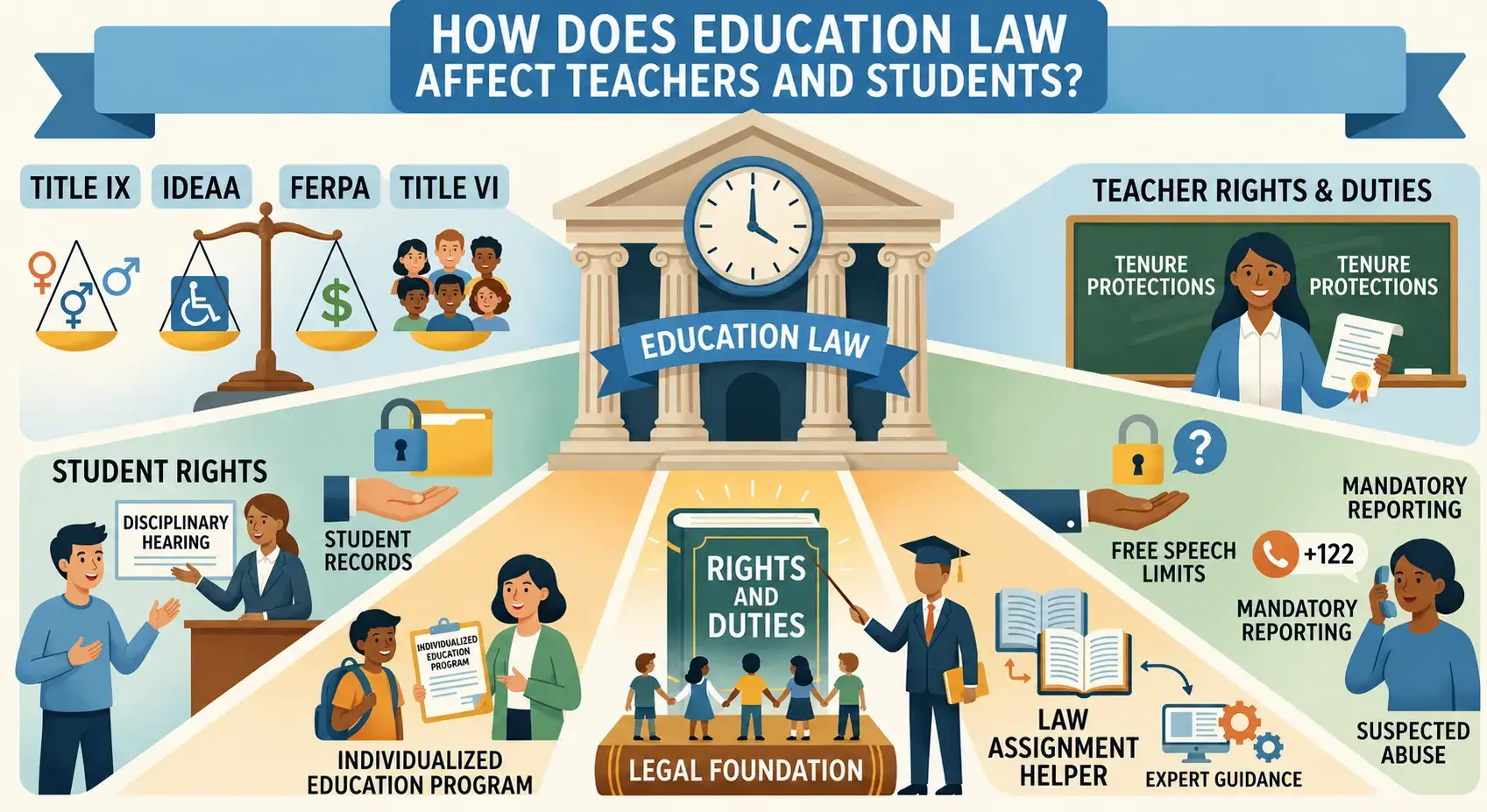
Education law comes when there is something wrong.” This is a common misperception of people. Education law does not only apply when a student gets expelled, but also when a teacher loses a job, or when a disabled student does not get legal support. In fact, it runs in the background of everyday school.
In 2022-23, the US public schools served over $49.6 million students alongside 3.2 million full-time equivalent teachers. That is a massive number to hold together. And only a clear framework makes it happen.
What is Education Law?
Education law is the body of rules, policies, and regulations that govern how educational institutions operate. Its scope includes the rights of students, teachers, and schools. It also involves both public and private schools across the country, from kindergarten to high school and beyond.
The following issues are covered under the education law:
- Special education and disability rights
- Student rights and discipline
- Civil rights and anti-disciplinary
- School operation and governance
- Educator employment
Teachers and students do not shed their constitutional rights to freedom of speech or expression at the schoolhouse gate.” – U.S Supreme Court
The Laws that Shape Every School Day
There is not a single education law that runs the system. A set of major federal laws combine to define rights and duties in a school.
The following are the education laws that target specific problems individually. And together they create the legal foundation that the entire education system rests on.
| Law | Year Enacted | Who it Protects | What it Does |
|---|---|---|---|
| Title IX | 1972 | Students and staff | Prohibits sex-based discrimination in any school or education program that receives federal funding |
| IDEAA | 1975 | Students with disabilities | Guarantees free appropriate public education (FAPE) for students with disabilities |
| FERPA | 1974 | Students and parents | Protects the privacy of students’ education records |
| Section 504 | 1973 | Students with disabilities | Prohibits discrimination against individuals with disabilities in federally funded programs |
| Title VI | 1964 | Students | Prohibits discrimination based on race, color, or national origin in any program or activity that receives federal financial assistance. |
What These Laws Mean for Students
The Right to a Safe, Fair Environment
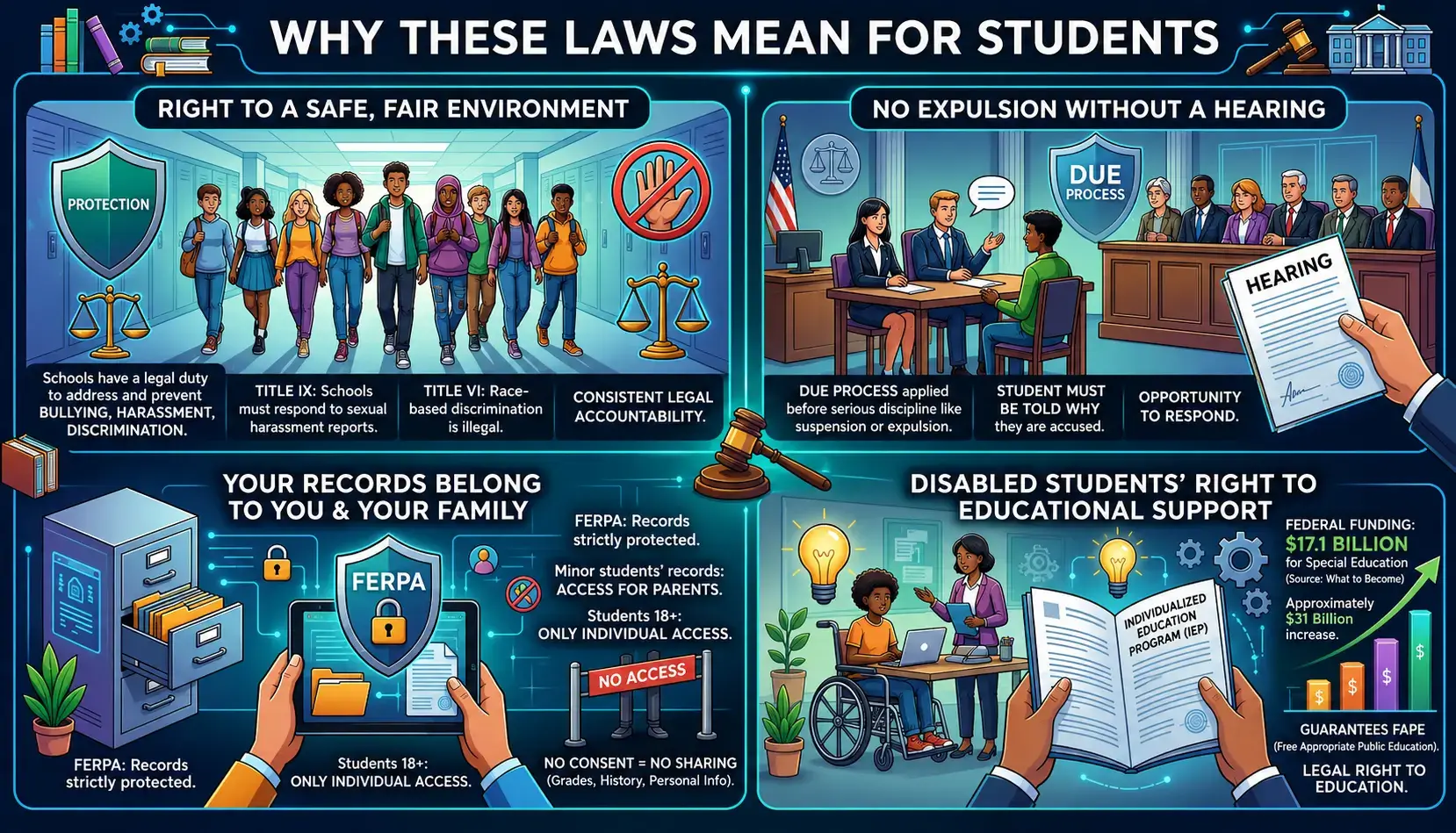
Schools carry a legal duty to address and prevent bullying, harassment, and discrimination. Under Title IX, schools must repond when a student reports sexual harassment. If a school ignores such a complaint, it exposes the school to serious legal liability.
Similarly, the same standard applies to race-based discrimination under Title VI. Students have the right to reach out to their professor or principal without being different because of who they are. That might sound obvious, but enforcing it takes consistent legal accountability.
You cannot Be Expelled Without a Hearing
Schools are not allowed to expel a student and move on. Education law applies due process before serious disciplinary actions like suspension or expulsion. The student must be told why they are accused or given a chance to respond.
Your Records Belong To You and Your Family
The FERPA education law clearly states that a minor student’s record should only be accessible to their parents. For those above 18, they must be the only ones to access their records individually. Schools cannot share grades, disciplinary history, or personal information with outside parties without consent.
Disabled Students Have a Legal Right to Educational Support
This is one of the most consequential areas of education law. IDEA guarantees disabled students the right to a free, appropriate public education. Practically, this means that schools must create an Individualised Education Program (IEP) for each eligible student.
The federal government allocated $17.1 billion for special education needs for disabled students. Additionally, it is approximately a $3.1 billion increase as compared to the previous year. This clearly means that disabled students can get all the legal rights to education under these laws. If not applied, schools or respective institutions would be exposed to serious circumstances.
What These Laws Mean for Teachers
Job Security is Protected
School teachers have stronger employment protections than most workers in any other field. Tenure laws exist across most US states, which ensure that a school cannot dismiss a teacher without a documented cause and proper process. Also, the teacher gets a chance to respond fairly to the reason.
Worth noting: these protections typically apply to public school teachers. Private school teachers rely primarily on employment contracts and do not carry the same rights in disciplinary matters.
Limitations on Free Speech Inside Schools
Teachers have First Amendment rights. However, these rights operate differently inside a classroom than they do outside it. Courts have consistently stated that the school has authority over what a teacher says inside a classroom.
Reporting Suspected Abuse
Every US state requires teachers to report suspected child abuse or neglect. Teachers are legally the mandated reporters. They might face criminal consequences as well if they fail to report. Also, proof is not required. A reasonable suspension is also enough to start the investigation.
| A Note for Students Studying Education Law Education law is a major part of legal studies. When it comes to applying these laws to your law assignments, it can be a real challenge to assess, evaluate, and ensure critical thinking in your work. Therefore, many students working on these tasks connect with a law assignment helper to get expert guidance on how these frameworks apply in a court decision and regulatory documents. |
Final Words
Education law has been integrated into schools for ages. While most people think these laws only show up when something goes wrong, they operate daily. Therefore, students and teachers need to understand its significance in protecting their rights.
The main problem is that people do not know what the education law is meant for until they are in a difficult situation. A teacher finds out about tenure rights when they are facing dismissal. A parent finds out about the IEP entitlements a year after their child needed one.